Craig’s Wedding Music Guide:
From Ceremony to Last Dance
How do you plan wedding music?
Start with the moments that need a specific song or cue—your ceremony entrance, exit, first dance, and final song. Give your DJ a short list of must-plays and songs to avoid, then describe the mood you want for cocktail hour, dinner, and dancing. Leave room for the music to respond to your guests.
You do not need to know the name of every song that will play at your wedding. You do need to know how you want the day to feel.
That is the starting point I give every couple. Music carries people from one part of the celebration to the next. It can make an entrance feel like you, give guests room to talk over dinner, and pull everyone onto the dance floor when the time is right. A good plan leaves room for all of that—and for the moments nobody could have scheduled.
Here is how I would think through the music, from the first arrival to the last song.
How do you choose wedding music that feels like you?
Before you make a playlist, tell your DJ what kind of wedding you are having. Is this a dressed-up evening with an easygoing crowd? A big family party where three generations will be dancing? An intimate dinner that turns into a late-night celebration?
Share the artists, genres, and songs you love, even if they do not seem to belong together. Your taste does not have to pass a consistency test. Also tell us what you cannot stand. A short “please don’t play” list can save everyone from a well-meaning request for a song you have heard enough times for one lifetime.
What music do you need for the wedding ceremony?
The ceremony has more moving parts than most people expect. Guests arrive, family members take their seats, the wedding party enters, you make your entrance, and everyone exits together. Each transition needs a cue, not necessarily a different song.
Think through guest arrival, family seating, the wedding party processional, your entrance, and the recessional. Choose the entrance and exit songs that matter to you. Then talk through the order of the processional with your DJ and coordinator. Who walks when? Does a song need to fade before the next person enters? Is there a microphone for the officiant and anyone doing a reading? If the ceremony is outside, what is the backup plan if the weather changes?
You should be thinking about the person waiting at the end of the aisle. Someone else should be watching the cues and making sure your grandmother can hear the vows.
What should play during cocktail hour?
Cocktail hour is where guests settle in. The music should have a point of view, but it should still let people catch up without shouting across a cheese board.
This is a good place for the music you love that might not belong on the dance floor: soul, jazz, indie, old-school R&B, or a mix that sounds like the two of you. Give your DJ a direction and a few examples. There is no need to build a minute-by-minute playlist.
What works for dinner and wedding toasts?
Dinner music has a job: keep the energy warm while people eat, talk, and listen to toasts. It can grow livelier as plates are cleared, especially if you want a natural lead-in to dancing.
The practical details matter here. Confirm who will introduce the wedding party, who is speaking, when the toasts happen, and whether anyone needs a microphone. A beautiful speech loses something when half the room cannot hear it.
How many songs should you give your wedding DJ?
Your first dance, parent dances, and any other special moments deserve songs that mean something to you. They do not need to impress anyone. If a full four-minute first dance feels long, ask about a shorter edit. You are allowed to enjoy the moment without wondering what to do with your hands for another two verses.
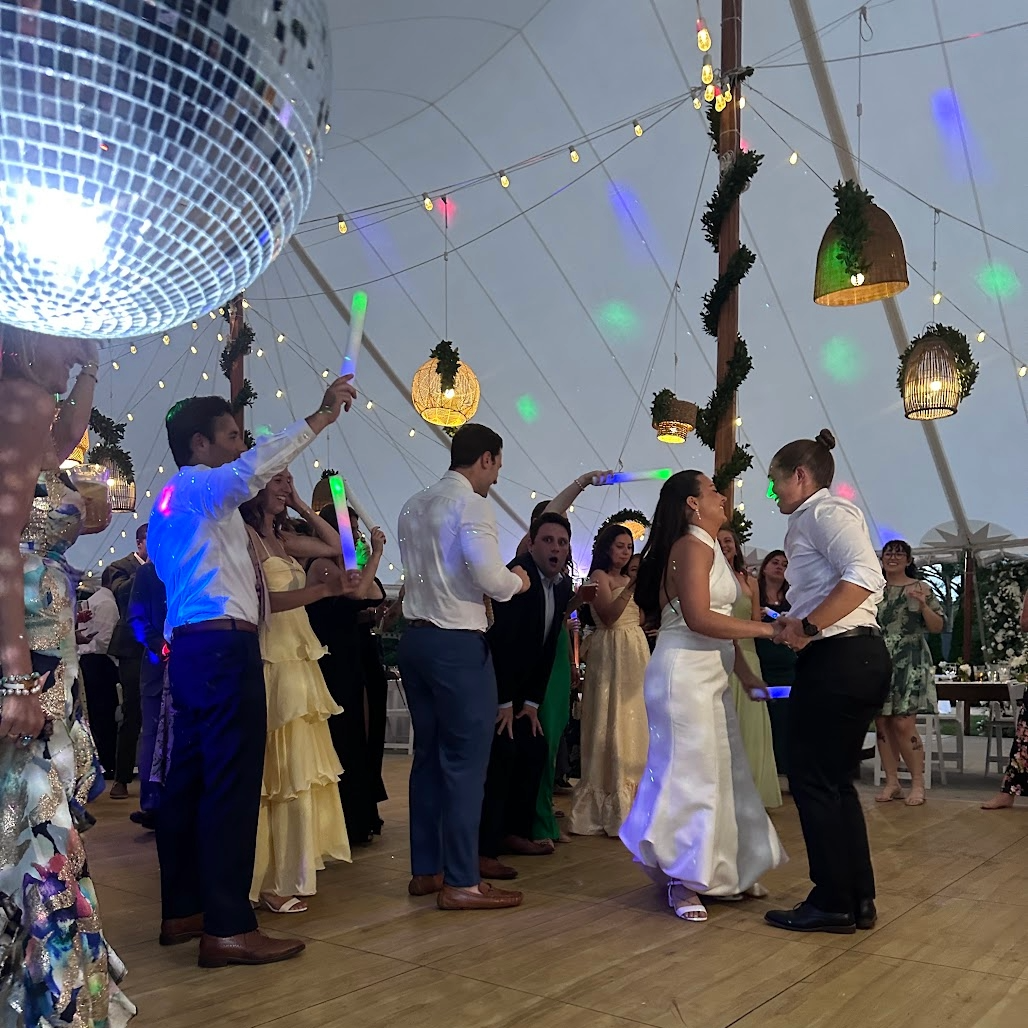
For the rest of the night, give your DJ a handful of must-plays rather than a script for every minute. Tell us which songs reliably get your friends moving, whether your family loves a particular era, and how you feel about guest requests. Then let the person behind the music respond to what is happening in the room. Sometimes the song you thought would be the moment lands a little flat. Sometimes an unexpected one fills the floor. That is why a wedding DJ pays attention instead of pressing play on a fixed list.
How should you choose the last song?
How do you want the night to end: one final singalong, a slow dance, or a song that sends everyone out laughing? Pick a direction, even if you leave the exact song open. It gives the evening a proper ending instead of letting the music simply stop.
The best wedding music plan is specific where it matters and flexible everywhere else. Tell me the moments you care about, the songs that feel like yours, and the things you would rather never hear. I will take it from there—and make sure the music fits the people in the room, not just the plan on paper.
Wedding music planning checklist
Ceremony entrance and exit songs, plus the order of the processional
Any microphones needed for vows, readings, introductions, and toasts
The mood you want for cocktail hour and dinner
First dance and any family dance songs, including whether you want shorter edits
A short must-play list, a do-not-play list, and your preference on guest requests
Your choice of a final song or the feeling you want for the ending
Planning your wedding? Old Soul Sounds can help you put the music, sound, and flow together so you can enjoy the day while it happens. Get in touch to talk through your plans.