What Couples Should Know About Ceremony Sound
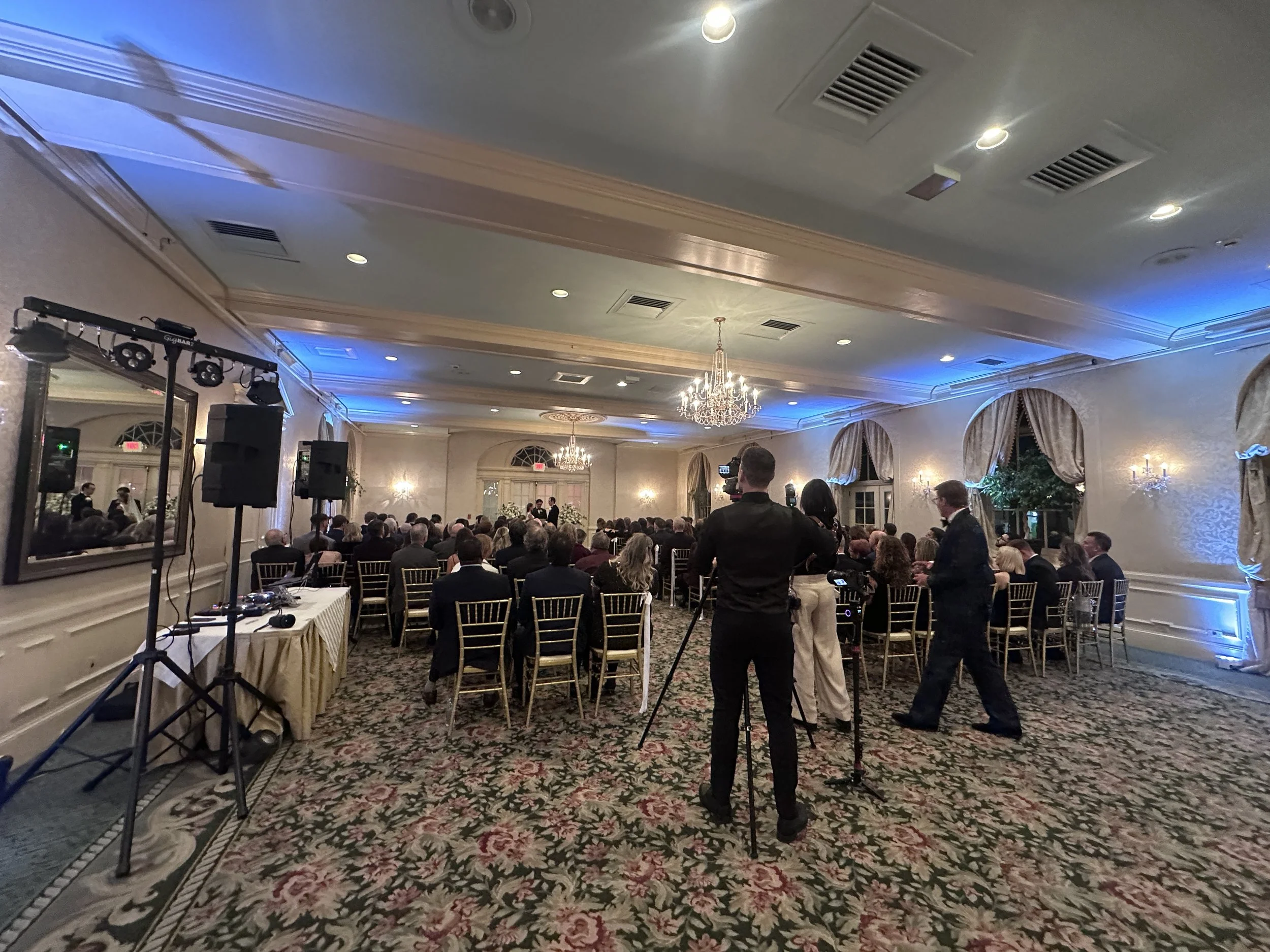
Because “I think they said ‘I do’” is not the guest experience we’re going for.
Wedding ceremony sound is one of those things nobody thinks about until they can’t hear anything.
The flowers look incredible. The aisle is perfect. Your vows are heartfelt. Unfortunately, everyone beyond the second row is smiling politely and hoping your facial expressions provide enough context.
Good ceremony sound is not about turning your wedding into a concert. It is about making sure your guests can actually hear the part they came to witness.
Here’s what you should know.
Yes, Your Officiant Needs a Microphone
Your officiant may have a naturally commanding voice. Your uncle may insist he “doesn’t need one.” Your venue coordinator may say the space carries sound beautifully.
Give them a microphone anyway.
Wind, traffic, distance, venue acoustics, and guests shifting in their seats can quickly swallow a human voice. A microphone lets your officiant speak normally instead of projecting like they are announcing a high school football game.
Your Vows Need Some Help, Too
Most couples do not deliver their vows to the crowd. They look at each other and speak softly because, emotionally speaking, there are already a lot of things happening.
That is lovely. It is also difficult to hear from Row 12.
If you are writing personal vows, ask how they will be amplified. The microphone setup should capture both of you without requiring an awkward handoff after every sentence.
The goal is heartfelt and intimate—not heartfelt and inaudible.
Outdoor Ceremonies Have Main-Character Energy
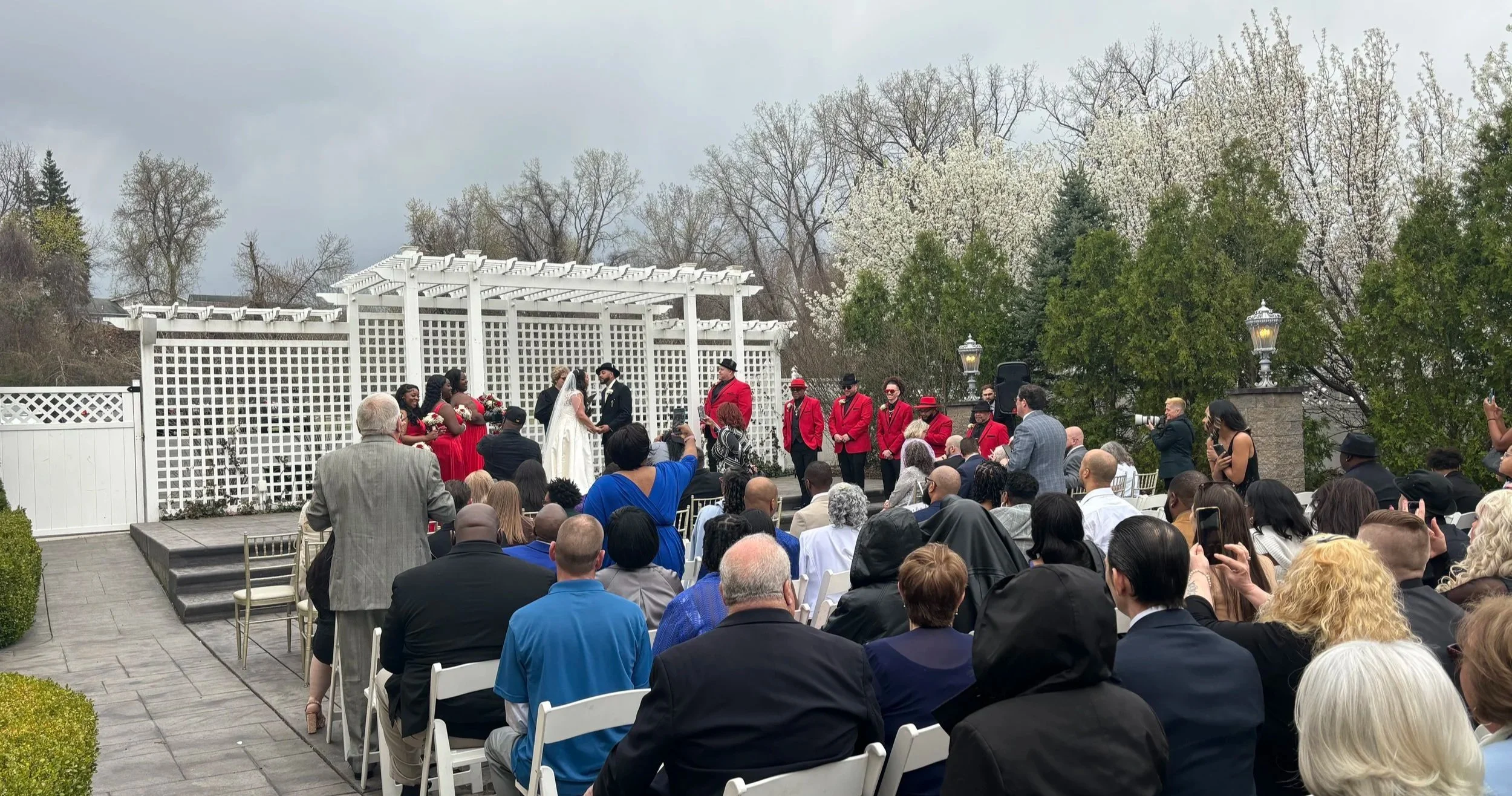
Outdoor weddings are gorgeous. They also come with wind, traffic, birds, nearby lawn equipment, rogue motorcycles, and at least one airplane that has apparently been waiting all day for your vows to begin.
Outdoor ceremony sound requires more than placing a speaker near a tree and hoping for the best. Your DJ should consider the size of the space, the number of guests, available power, wind conditions, and where speakers can be placed without ending up in every photo.
Weather matters, too. Electronics, famously, do not enjoy surprise rain.
Speaker Placement Is More Important Than Speaker Size
Bigger is not always better. Your ceremony does not need to rattle the folding chairs.
Speakers should be positioned so guests throughout the space can hear clearly without the front row feeling like they have been seated inside the sound system. Thoughtful placement also reduces feedback and keeps equipment from becoming the accidental centerpiece of your ceremony photos.
Good ceremony sound should be noticeable only because nothing went wrong.
Music Cues Need More Detail Than “You’ll Know When”
Your DJ will need to know who is walking, in what order, to which song, and when each song should begin or fade.
“You’ll know when you see me” is technically a plan. It is not a particularly relaxing one.
Before the wedding, confirm:
Who is walking down the aisle
The exact order of entrances
Which song belongs to each entrance
Whether you want a specific part of the song played
Who will signal that everyone is ready
What should play during the recessional
One designated cue person is ideal. Five relatives giving different hand signals from across the venue is less ideal.
Live Musicians Still Need a Sound Plan
A string player, vocalist, or acoustic musician can add something beautiful to a ceremony. But “live” does not automatically mean “loud enough for 150 people.”
Find out whether your musicians need microphones, power, speakers, or a way to play accompaniment tracks. Your DJ and musicians should connect before the wedding—not ten minutes before the processional while someone searches for an adapter.
Your Ceremony May Need Its Own Sound System
If the ceremony and reception are in different locations—or even on opposite ends of the same property—your DJ may need separate equipment for each space.
Otherwise, the DJ has to dismantle the ceremony setup and rebuild everything for cocktail hour while guests are already moving toward the bar. That is a stressful equipment relay race nobody needs.
Ask whether ceremony sound is included in your package and whether a separate system will be used.
There Should Always Be a Backup Plan
Microphones lose batteries. Cables misbehave. Weather changes. Technology occasionally decides it has other plans.
A professional DJ should arrive prepared with backup equipment, extra batteries, alternate music sources, and a plan for outdoor conditions. You may never see any of it, which is exactly the point.
A Few Questions Worth Asking
Before the wedding, ask your DJ:
Is ceremony sound included in our package?
How will our officiant and vows be amplified?
Do you provide separate equipment for the ceremony?
Can you work with our live musicians?
Who will coordinate the music cues?
When will the system be tested?
What backup equipment do you bring?
What happens if the weather changes?
None of these questions are especially glamorous. Neither is having your grandmother ask what you said during the entire ceremony.
Let Them Hear the Good Part
Your ceremony is full of moments people will want to remember: the music beginning, the first words from your officiant, the vows, the laughter, and the final announcement before you walk back up the aisle together.
Old Soul Sounds handles the technical details so your guests can stay focused on the reason they are there. We plan the equipment, music, timing, and transitions around your ceremony—without making the setup feel like it belongs on a festival stage.
Because your guests should hear every word. Especially the “I do” part.